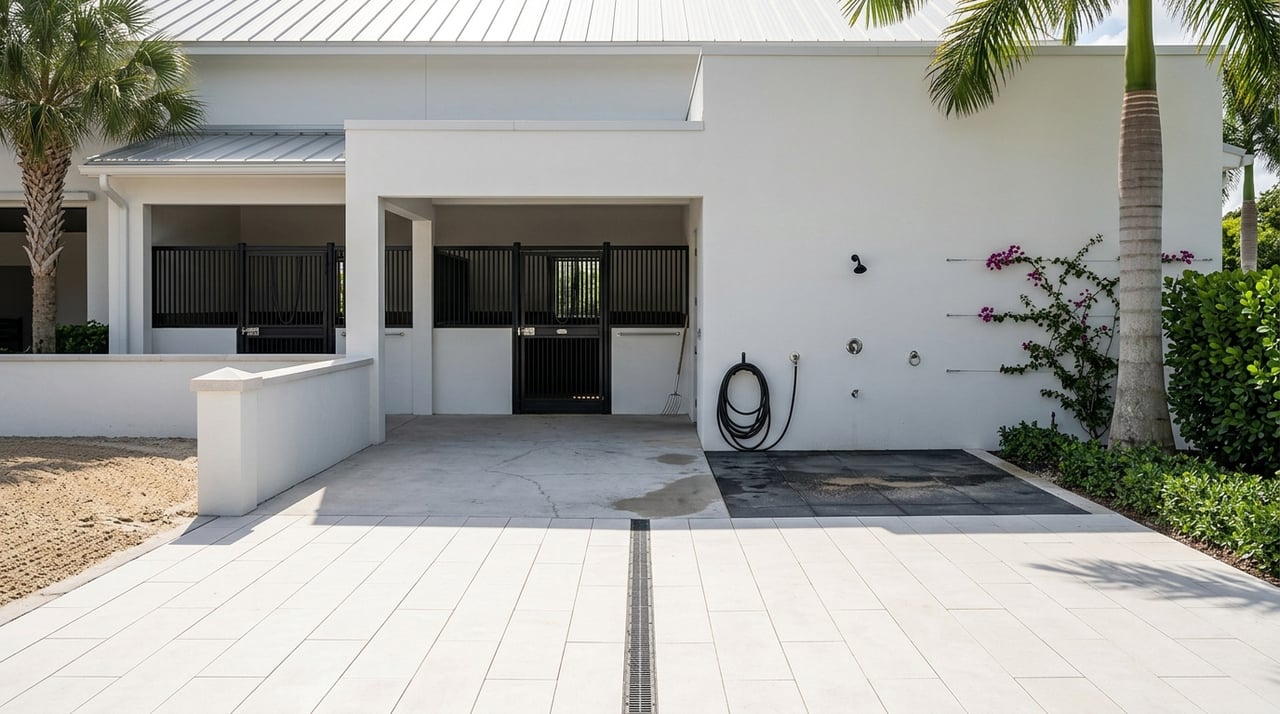
If you are shopping for a Wellington equestrian property, it is easy to get distracted by a pretty barn or a polished ring. But in this market, the best properties work well every single day, especially during show season and summer rain. Knowing what to look for can help you compare listings more clearly, avoid expensive surprises, and choose a property that supports both horse care and your lifestyle. Let’s dive in.
Why Wellington property details matter
Wellington is not just another horse market. The Village describes itself as an international equestrian community, with more than 57 miles of trails and an equestrian area of roughly 9,000 acres in the western and southern parts of Wellington. That setting means your buying decision should go beyond the home and barn to include trail access, daily horse movement, and how easily the property supports training and hauling.
Wellington’s equestrian area also includes major destinations such as Wellington International and the National Polo Center, along with public and private bridle trails. Wellington International is about 20 minutes from Palm Beach International Airport and hosts year-round hunter/jumper and dressage competition. For you as a buyer, location and circulation are practical features, not just convenience perks.
South Florida’s climate adds another layer. Warm temperatures, humidity, and rainy summers make ventilation, drainage, and mud control especially important. Wellington’s own Equestrian Preserve Committee has identified flooding and drainage as recurring concerns in the equestrian area, so these are features worth inspecting closely.
Prioritize barn workflow, not just stall count
A barn should function like a system. Stall count matters, but layout often matters more because it shapes how smoothly horses, people, and equipment move through the property each day. A well-planned setup can save time, reduce congestion, and make the property easier to manage in both dry and wet conditions.
You will want to look at how the barn connects to the aisle, tack room, wash areas, and feed storage. Guidance cited in the research report notes that aisles are often used for horse movement, grooming, shoeing, and saddling, so their size and flow are important. If horses have to cross muddy routes or tight bottlenecks to reach basic support spaces, daily routines can become harder than they need to be.
Look for support spaces that work
A strong equestrian property should include more than stalls. Feed storage, tack space, and wash areas all play a role in daily use and long-term upkeep. These areas should feel practical, durable, and easy to maintain.
The research report also notes that stall and aisle floors should sit on a well-drained base, while tack rooms, wash areas, and grain storage should be concrete and well drained. In Wellington, where rain and humidity are part of the equation, those details can make a major difference in cleanliness and usability.
Check stall safety and durability
Inside the barn, safety comes first. Stall interiors should be smooth, durable, and free of protrusions that could create risk. Fixtures should also be easy to clean, which helps with maintenance and day-to-day efficiency.
When you tour a property, pay attention to wear patterns. A barn that looks attractive at first glance may still have design issues that affect horse comfort or labor demands. Focus on function as much as finish.
Ventilation matters in Wellington’s climate
Barn ventilation is not a minor detail in South Florida. Proper air exchange helps remove moisture, manage heat, and improve air quality by reducing dust, ammonia, fumes, and condensation. In a warm and humid market like Wellington, that can directly affect how comfortable and workable the barn feels.
The research report recommends looking for ventilation systems or layouts that support fresh-air movement throughout the barn. As you evaluate a property, consider whether stalls and enclosed spaces feel airy or trapped. Good ventilation should support healthier, more comfortable daily conditions rather than forcing you into immediate upgrades.
Review electrical and lighting setup
Electrical service should also match real barn use. According to the research report, service needs may include lighting, grooming tools, ventilation, heat tape, and water heating if used. That means a property’s electrical setup should be seen as part of the working infrastructure, not an afterthought.
Lighting deserves a close look too. Dust-proof fixtures and adequate lighting in stalls, aisles, tack rooms, and feed storage areas can improve safety and daily workflow. These details also affect upkeep, convenience, and overall barn function.
Evaluate arena footing below the surface
An arena may look finished and polished, but the real test is what lies underneath. The research report describes arena footing as a three-layer system: top, base, and sub-base. For outdoor arenas, the sub-base and overall drainage strategy are especially important because they help prevent ponding and maintain usability after rain.
In Wellington, where wet weather can quickly expose weak site work, you should ask about more than the visible riding surface. Find out how the base was built, how water drains, and when the footing was last refreshed. Those questions can tell you much more than appearance alone.
Ask the right footing questions
When comparing properties, keep your arena questions simple and practical:
- What is the footing made of?
- How is the arena base designed for drainage?
- Has the footing been maintained on a regular schedule?
- Does the arena stay usable after heavy rain?
Sand is common because of its drainage capacity, and uniformly graded, washed sand can help reduce dust. Still, no single surface tells the full story without understanding the layers below it.
Turnout and paddocks should stay usable
Turnout value is not just about acreage. What matters is whether those areas remain functional through changing weather and daily horse traffic. In Wellington, a paddock that looks fine on a dry day may tell a different story after a storm.
The research report recommends avoiding wet areas, wetlands, ponds, creeks, and steep slopes when evaluating pasture sites. It also notes that dry lots or sacrifice paddocks are useful in wet conditions and should provide enough space for horses to move and regroup. For you, that means turnout planning should support year-round use, not just good-weather impressions.
Watch for mud trouble spots
Mud management is a major feature check in South Florida. Preventative drainage is the best long-term defense, and high-traffic pads can be especially useful at gates, laneways, shelters, and dry lots. If those traffic-heavy areas already show signs of staying soggy, you may be looking at an ongoing operational issue.
When touring a property, pay attention to ground conditions around gates, barn entries, and routes used by horses or equipment. Chronic mud affects usability, maintenance, and day-to-day labor. It can also signal broader drainage problems elsewhere on the site.
Fencing and gates are working infrastructure
Safe fencing is one of the most important practical features on an equestrian property. The research report recommends horse-safe, highly visible fencing without sharp edges or barbed wire. Reliable gate hardware matters too, since gates should be secured with dependable latches or combinations of closures.
You should also think about scale and access. Gates and lanes need to be placed where horses and equipment actually travel, and they should be wide enough for tractors, drags, mowers, trailers, and multiple horses. A property can have beautiful improvements and still feel inefficient if access points are too narrow or poorly located.
Don’t overlook manure handling and storage
Manure management may not be the first feature buyers ask about, but it should be on your list. It affects odor, flies, runoff, neighbor relations, and the amount of labor required to keep the property operating smoothly. In other words, it is a real estate issue as much as an operations issue.
The research report notes that all barns should have a manure management plan, and that storage should be placed away from runoff, wells, flooding, neighbors, and residences. It also states that a horse may produce about 40 to 50 pounds of manure per day. That volume adds up quickly, so it is smart to ask where manure is stored, how often it is hauled, and whether the storage area is covered or protected from rain.
A smart Wellington buyer’s checklist
As you compare Wellington equestrian properties, use a simple checklist that focuses on daily function:
- Does the barn layout support smooth movement from stall to aisle to wash, tack, and feed areas?
- Is ventilation adequate for humidity, dust, and heat?
- Are stall floors, aisles, and support spaces well drained?
- Is the arena built with drainage in mind, not just cosmetic footing?
- Do turnout and dry-lot areas stay usable after rain?
- Are gates, lanes, and parking areas large enough for horses, trailers, and equipment?
- Is fencing horse-safe and easy to maintain?
- Is there a clear manure storage and hauling plan?
- Does the property support Wellington’s show-season rhythms, trail use, and daily hauling needs?
The strongest Wellington listings usually support both horse care and the pace of the local equestrian scene. That includes trail use, training, show access, and wet-season maintenance. When you evaluate properties through that lens, it becomes easier to separate a beautiful presentation from a truly functional equestrian estate.
If you want guidance on identifying a Wellington equestrian property that works on paper and in practice, Triple Crown Group offers local insight across acquisition, renovation planning, and long-term property stewardship.
FAQs
What features matter most in a Wellington equestrian property?
- The most important features are often barn workflow, ventilation, drainage, arena construction, turnout usability, safe fencing, gate access, and a practical manure storage plan.
Why is drainage so important for Wellington horse properties?
- Wellington’s warm, humid climate and rainy summer season make drainage essential for barns, arenas, paddocks, and high-traffic areas that can otherwise turn muddy or flood-prone.
What should you ask about a Wellington riding arena?
- Ask how the top layer, base, and sub-base were built, how the arena drains, and when the footing was last maintained or refreshed.
How do you evaluate turnout areas on a Wellington equestrian estate?
- Look at whether paddocks and dry lots stay usable after rain, avoid wet or low-lying problem areas, and provide enough room for horses to move comfortably.
What barn details should buyers inspect in a Wellington horse property?
- Focus on stall safety, aisle flow, feed and tack room placement, wash areas, floor drainage, lighting, ventilation, and whether the electrical service supports daily barn use.
Why does manure management matter when buying a Wellington equestrian home?
- A clear manure plan helps control odor, flies, runoff, and labor demands while keeping the property more practical to operate over time.